Neuroscience Minor
Study how the brain shapes behavior — and add a credential that pairs well with psychology, biology, pre-health, and liberal arts degrees.
Program Overview
Shawnee State’s minor in neuroscience offers a cross-disciplinary approach to studying the brain and nervous system, combining perspectives from biology, psychology, and linguistics. This minor provides a strong foundation in neuroanatomy, neuropharmacology, and behavioral physiology, while allowing students to explore specialized topics such as language acquisition and animal behavior. The minor in neuroscience is especially valuable for students pursuing careers or graduate study in health sciences, business, psychology, law, or education.
At A Glance
Neuroscience Minor
Degree
Minor
Format
On campus
Length
Complete alongside your major
Credits
15-19
Why Study Neuroscience Minor at Shawnee University
The minor pulls from three disciplines — biology, psychology, and linguistics — so you see the brain and behavior from multiple angles instead of just one.
Required coursework grounds you in neuroanatomy or neurobiology, then in neuropharmacology and the physiology of behavior, before you choose electives.
Elective options let you specialize in animal behavior, language acquisition, sensation and perception, or cognitive neuroscience.
It's a useful preparation for graduate study in neuroscience and for careers in healthcare, education, and law where understanding cognition matters.
The Neuroscience minor is 15–19 credit hours. A grade of "C" or better is required in all minor courses, and no more than 9 hours can also count toward your major. Courses taken pass/no-credit don't count.
- Required (3–4 hrs.): choose BIOL 3660 Neuroanatomy or PSYC 3150 Neurobiology of Behavior
- Core Courses (8 hrs.): BIOL 4670 Neuropharmacology and PSYC 4150 Physiology of Behavior
- Electives (6–7 hrs.): choose two — BIOL 4355 Animal Behavior, LING 4452 Language Acquisition, PSYC 3151 Sensation and Perception, or PSYC 3152 Cognitive Neuroscience
- Psychology and biology majors heading toward graduate school
- Pre-med, pre-PA, and pre-health students
- Education students interested in how learning and behavior work
- Pre-law or social work students who want a stronger grounding in human behavior
- Liberal arts and language students curious about how the brain processes language and meaning
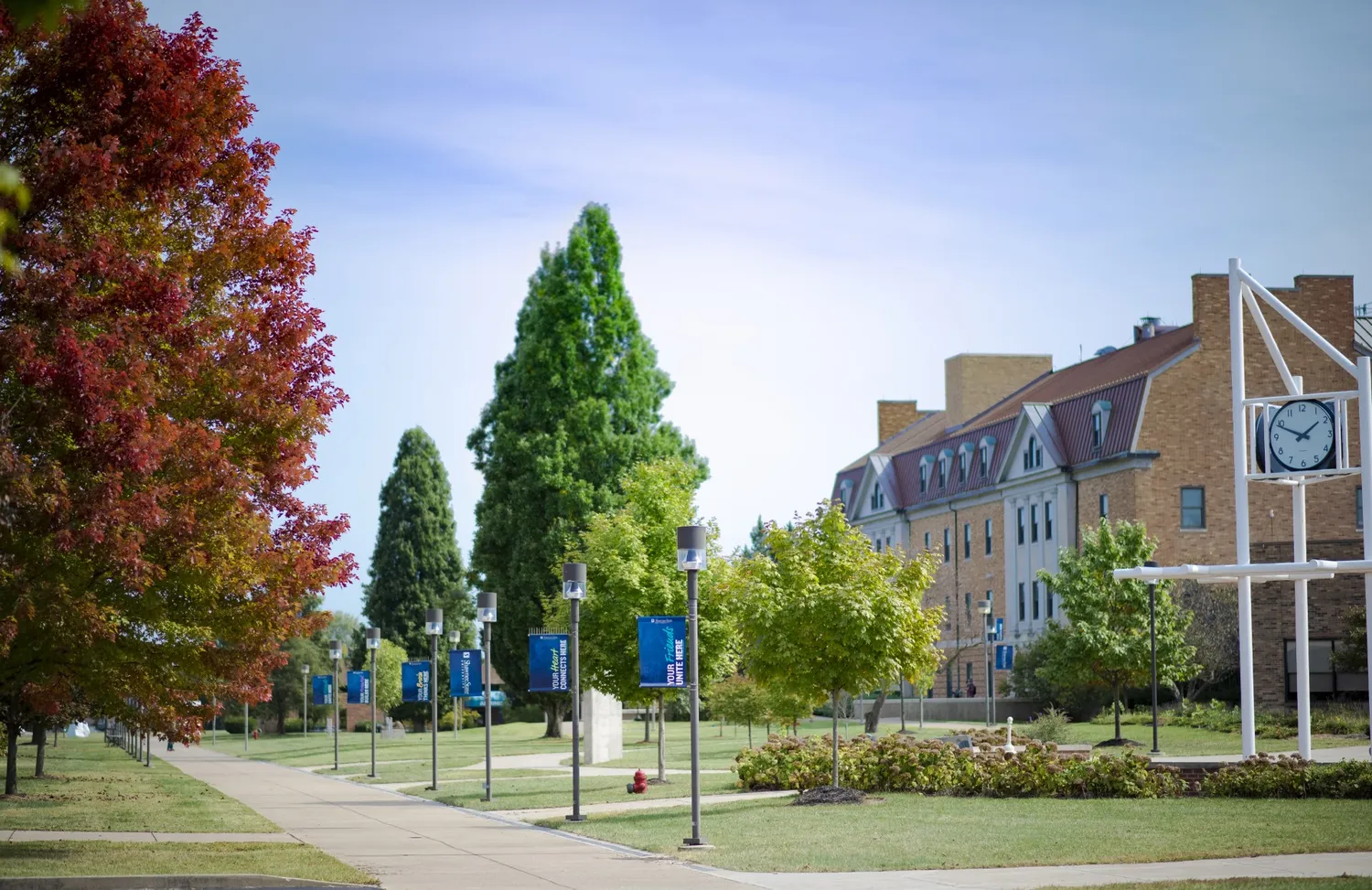
Neuroscience minor coursework is taught on the Portsmouth campus across the Natural Sciences and Social Sciences departments.
Neuroscience Minor Frequently Asked Questions
Yes — you pick one of BIOL 3660 or PSYC 3150 as your foundation. Choose based on your major and which prerequisites you've already taken.
Up to 9 hours can double-count. Your advisor will help you sequence courses so you stay within that limit.
Yes. The minor is open to any major. Linguistics, education, business, and pre-law students all find a fit.
