Game & Simulation Arts Bachelor’s Degree
Build the art that makes games and simulations come alive — from concept and character to motion capture and senior studio collaboration with student programmers.
Program Overview
In the Game & Simulation Arts program, you’ll master preproduction, game design and development, and ways to apply art to simulation to bring your own work to life. The Bachelor of Fine Arts degree will prepare you with an understanding of the role art and design plays within the gaming industry.
In your coursework, you’ll gain a foundation of skills in art and aesthetics, vocabulary, and a panel of visual experiences that are related directly to the gaming design field. Your coursework will also build up your skills in animation, art asset development, game design, and motion capture as you gain a unique understanding of the ever-changing gaming industry.
While offering an intensive foundation in game design courses, you’ll also understand how art and design can apply to real-world applications. On completion of the program, you’ll have valuable experience that can translate to visual design and simulation across multiple disciplines.
In a fast-paced, ever-changing industry, careers in gaming – particularly in AR/VR are expected to grow to $27.9 billion by 2028. With several applications of game design skills valued in a range of industries, career possibilities are nearly endless.
Career Outcomes
How to Apply
-
Start your application
Free, takes about 15 minutes.
-
Send transcripts
Have your high school guidance counselor send them to admissions@shawnee.edu
-
File the FAFSA
School code 009942. Required for Free Tuition.
-
Get your decision
Most decisions in under 7 days.
At A Glance
Game & Simulation Arts Bachelor’s Degree
Degree
B.F.A.
Format
On Campus
Length
4 years (typical)
Class Size
12:1
Location
Main Campus

Why Study Game & Simulation Arts Bachelor’s Degree at Shawnee University
You'll study in a program The Princeton Review has named a Top Game Design school for 15 consecutive years — ranked #2 in the Midwest and #1 in Ohio.
That recognition reflects the depth of the curriculum, the experience of the faculty, and the work students put into the studio.
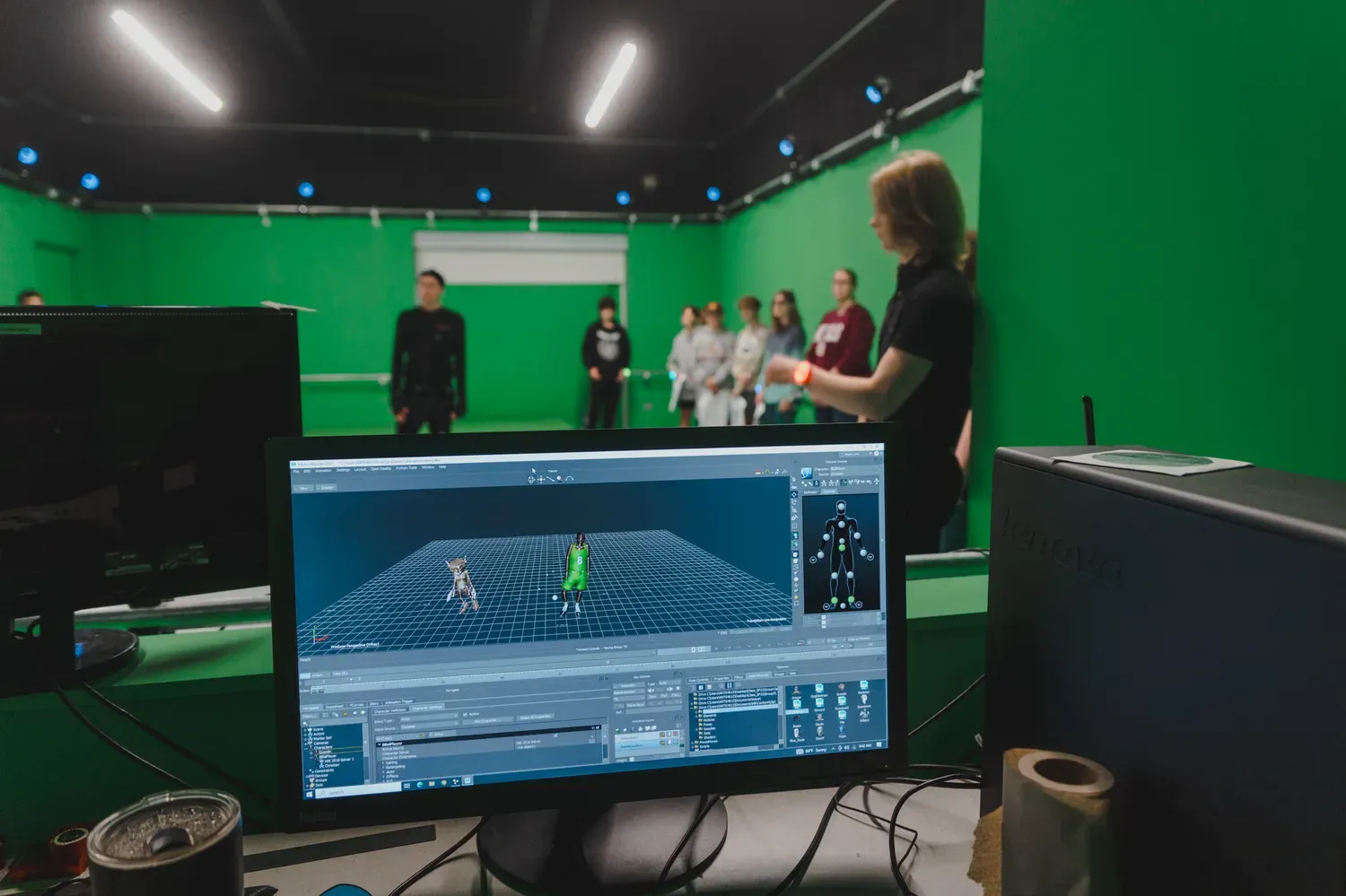
You'll work in a real motion capture studio. The lab is part of your coursework, not a tour stop.
You'll learn to capture movement, clean data, and apply it to characters and creatures in your own scenes.
You'll build skills across the full art pipeline — drawing and design fundamentals, 2D and 3D digital tools, animation, character and environment art — so you finish with a portfolio that holds up against students from much larger programs.
You'll spend your final year in Senior Studio working alongside students from the Game Programming degree to ship a complete game from preproduction through release.
That cross-discipline collaboration is how studios actually work.
You'll have a clear path into work beyond entertainment: motion capture, 3D, and simulation skills are used in healthcare, training, engineering visualization, and AR/VR — fields the program prepares you to enter.
Coursework moves from broad art foundations into the specialized skills game studios hire for. You'll start with 2D and 3D foundations and art history, then move into game studio courses in digital imaging, game documentation, animation, and 3D modeling. Programming foundations and motion capture rotate through the curriculum so you understand the technical side of the work, not just the art.
- Game Studio (year-one anchor for the rest of the major)
- Digital 3D Foundations Studio — modeling, texturing, lighting
- Hard Surface 3D and Organic 3D — props, weapons, characters, creatures
- Animation Studio and Motion Capture — performance, motion editing, retargeting
- Game Design, UI Design for Games, and Game Documentation
- World Design and Creation — environment art, level layout, set dressing
- Senior Studio I and II — collaborative game production with Game Programming students
Hands-on work is the spine of the degree. You'll use the motion capture lab, build assets and animations in studio courses, and have access to the on-campus Kricker Innovation Hub for cross-disciplinary projects. The Shawnee Game Conference — the longest-running academic game conference in the Midwest — gives you a place to present your work and meet developers, recruiters, and faculty from other programs. Senior Studio puts everything together: you'll team up with Game Programming students to plan, build, and finish a complete game.
- Use industry tools, software, and pipelines to produce game-ready art and animation
- Build work that shows strong concepts, focused research, and a clear command of 3D software
- Speak the language of design critique and presentation so you can defend your work and improve from feedback
- Understand how art and design fit inside a working game studio and across simulation industries
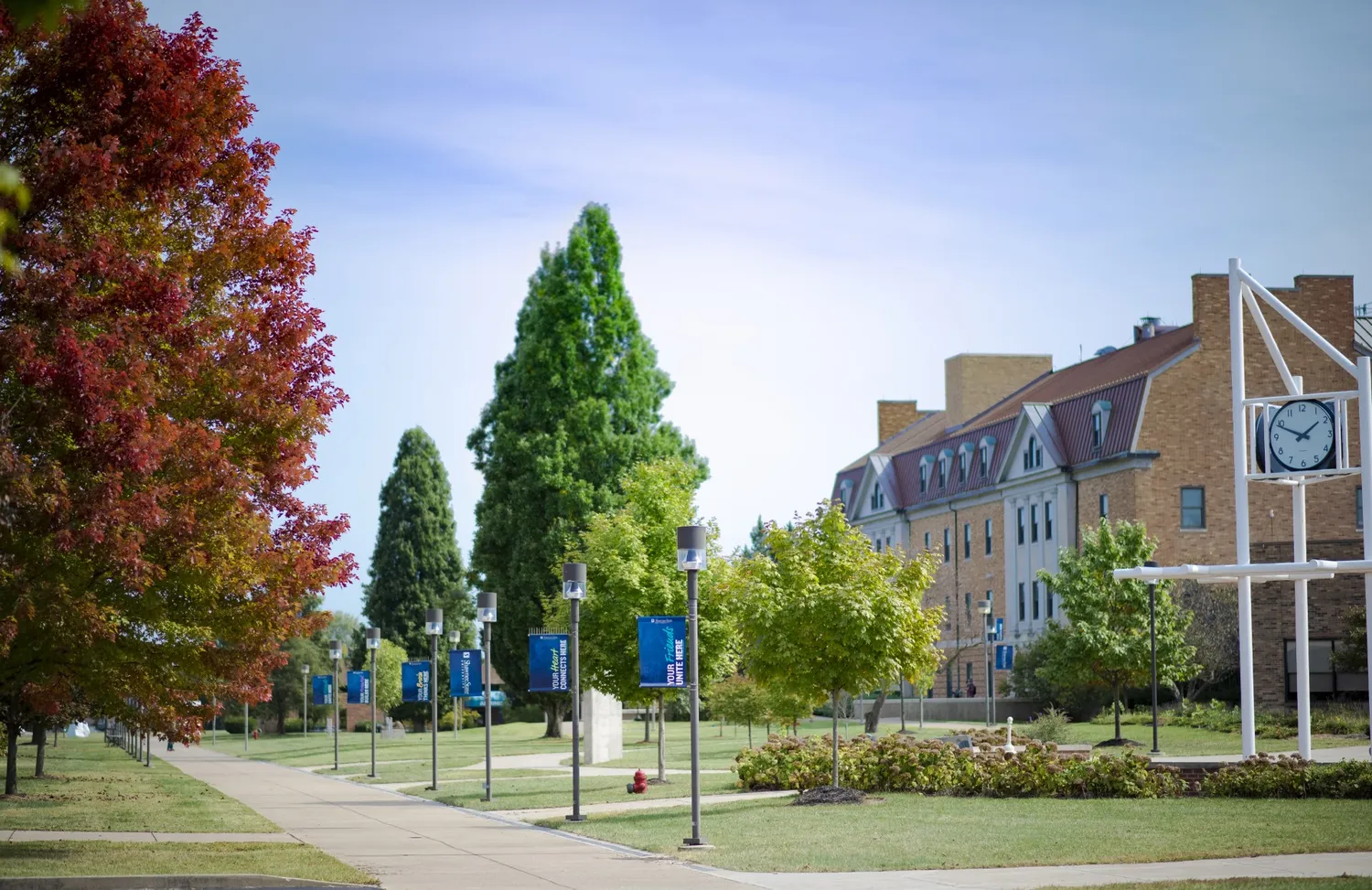
Classes meet on the Shawnee State campus in Portsmouth, Ohio, in the Department of Fine, Digital and Performing Arts studios and motion capture lab.
Game art skills travel. Graduates work in game studios, but also in fields that depend on 3D visualization, simulation, and interactive media.
- Game artist (characters, environments, props)
- 3D modeler or texture artist
- Animator (in-game, cinematic, or motion capture)
- Technical artist or pipeline support
- UI/UX designer for games and interactive products
- Simulation artist (training, healthcare, engineering visualization)
- AR/VR content creator
Game art skills are used well beyond entertainment — corporate training, healthcare visualization, design engineering, environmental science, and urban planning all hire artists who can model, animate, and tell a story in 3D.
Tuition and Financial Aid
Shawnee State’s tuition is among the lowest in Ohio, and the Shawnee Advantage Tuition Guarantee keeps your rate flat for four years. Scholarships including Choose Ohio First and the Pell-Eligible Free Tuition Program may also apply.
Game & Simulation Arts Bachelor’s Degree Frequently Asked Questions
Some experience helps, but the program is built to take you from foundations through advanced studio work. You'll spend your first year on traditional and digital drawing fundamentals before specializing.
Look at the Game Programming B.S. in the Engineering Technologies department. The two degrees collaborate in Senior Studio, so you'll still work with art students if you choose programming.
No. Game art skills apply to corporate training, healthcare, design engineering, environmental science, urban planning, and AR/VR. The portfolio you build here is useful across many industries.
Yes. Studio courses produce shippable assets, and Senior Studio is a full game production with student programmers.
Program handbook
Program expectations and degree requirements are available by contacting the Department of Fine, Digital and Performing Arts at (740) 351-3118.
Accreditation
Shawnee State University is accredited by the Higher Learning Commission (HLC).
